
The Research-Backed Benefits of Sound
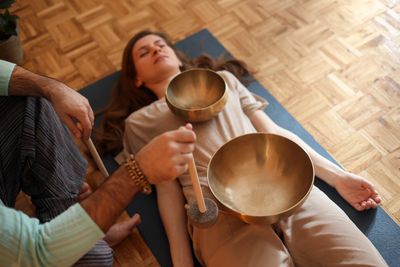
Sound baths, and sound journeys (also called “sound healing” sessions) are immersive relaxation experiences that use sustained tones and vibrations—often from instruments like Tibetan/Himalayan singing bowls, crystal bowls, gongs, chimes, and voice—to support a calm, meditative state. While the wellness world can get a little hype-y, the research base is growing, and several benefits are increasingly supported by clinical and experimental studies—especially around stress reduction, mood, sleep, and pain.
Below is what research suggests sound-based practices can help with, what the evidence looks like, and how to get the most out of a session.
1) Stress and anxiety reduction
One of the most consistent findings across sound-based interventions is a measurable relaxation response—often reflected in self-reported anxiety/stress scales and physiological markers.
- A randomized controlled trial (RCT) comparing a Tibetan singing bowl session with progressive muscle relaxation and a control condition found meaningful short-term relaxation effects in anxious adults, using measures including anxiety ratings plus physiological/brain measures (e.g., HRV/EEG tracking). ResearchGate
- More recent systematic reviews focusing specifically on Tibetan singing bowl interventions conclude that many studies report improvements in stress/anxiety and related physiological indicators, though the authors also note limitations like small sample sizes and variability in methods. MDPI
- Broader research on music listening interventions (not limited to “sound baths,” but directly relevant because it’s also structured sound exposure) finds that music listening can reduce naturally occurring state anxiety in controlled study designs. SAGE Journals
What this means in practice: If your goal is downshifting from “wired” to “settled,” a sound bath is plausibly a helpful tool—especially as a guided, low-effort relaxation practice.
2) Improved mood and emotional well-being
Sound baths typically combine stillness, soothing sound, and focused attention—an evidence-friendly mix for mood support.
- Observational research on singing bowl sound meditation has reported reductions in tension and negative mood states after a session (pre–post improvements). International Sound Therapy Association
- A large, high-quality systematic review and meta-analysis published in JAMA Network Open found that music interventions (including music listening and music-making/therapy across multiple contexts) are associated with clinically meaningful improvements in mental health–related quality of life. While not specifically “sound baths,” it supports the underlying idea that structured sound/music experiences can improve well-being. JAMA Network
Practical takeaway: Many people leave sound baths feeling lighter, calmer, or “emotionally reset.” Research suggests that sound-based interventions can positively impact mood—especially when practiced consistently.
3) Better sleep support (especially for winding down)
If you’ve ever tried to sleep with a busy mind, you already know why sound baths are popular at night. The best evidence here comes from music-based sleep interventions more broadly.
- A systematic review and meta-analysis examining music interventions for sleep in adults with mental health problems evaluated sleep quality outcomes and supports music as a sleep aid in certain populations. Cambridge University Press & Assessment
- Earlier reviews of randomized trials also found that passive music interventions can improve sleep quality. ScienceDirect
How sound baths fit in: A sound bath is essentially a structured, guided relaxation session using sound. While not every sleep study uses bowls/gongs, the “sound-to-relaxation-to-sleep” pathway is supported across the music/sound literature.
4) Pain relief and body relaxation
Pain is complex—the nervous system, attention, emotion, and muscle tension all interact. Sound-based interventions may help through relaxation, distraction, and autonomic regulation.
- A 2025 systematic review and meta-analysis of RCTs reported benefits of music therapy for chronic pain and related outcomes (including mood variables). SpringerLink
- Vibroacoustic therapy (low-frequency sound vibration delivered through specialized equipment) is a close cousin of “sound bath” work and has been reviewed in clinical contexts for pain; the literature is promising but still developing and heterogeneous. BMJ Open
Important reality check: Pain findings are often strongest when sound/music is used as an adjunct (alongside usual care), not as a replacement for medical treatment.
How sound baths work
Research points to several overlapping mechanisms that make sound baths feel so regulating:
- Nervous system downshifting: Slow, continuous tones can encourage a parasympathetic (“rest and digest”) state, often tracked via heart-rate variability and related markers in some studies. ResearchGate
- Attention as an anchor: Immersive sound gives your brain a simple target—reducing rumination and mental noise (similar to breath-focused meditation).
- Emotional processing: Sound can alter arousal and affect, which may explain the common “emotional release” people describe, and the mood shifts observed in studies. International Sound Therapy Association
More research is needed
To keep this evidence-based: the strongest data supports relaxation, stress/anxiety reduction, mood shifts, sleep support, and some pain-related benefit—but the field still needs more large-scale, well-controlled trials specifically on “sound baths” as they’re commonly offered today (with standardized protocols and longer follow-up). Reviews of singing bowl studies regularly note these limitations. MDPI
Tips to get the most benefit from a sound bath
- Treat it like nervous-system training: Consistency matters more than intensity.
- Choose a facilitator who prioritizes comfort and consent: Volume, proximity of instruments, and pacing should feel safe for your body.
- If you’re using it for sleep: Do it earlier in the evening, then keep your post-session environment dim and low-stimulation.
- If you have sound sensitivity, migraines, PTSD, or a seizure disorder: Ask for accommodations (lower volume, farther distance, shorter session) and consider consulting a clinician if unsure.